Emergencies rarely come with a warning. A child may fall while playing, an elderly family member might experience sudden breathing difficulties, or someone could suffer a serious injury during a weekend outing. In such situations, knowing how to respond can make a significant difference. For families living in Canberra, learning essential first aid skills is a practical way to improve safety and prepare for unexpected situations.
Understanding Canberra first aid practices can help parents, caregivers, and other family members respond confidently when accidents occur. From treating minor wounds to recognising serious medical emergencies, first aid knowledge provides valuable skills that can benefit the entire household.
Understanding Common Household Emergencies
Homes are generally considered safe spaces, but accidents can happen during everyday activities. Children may experience cuts, burns, or falls, while adults can encounter injuries while cooking, gardening, or completing household repairs.
Recognising potential hazards is an important part of family safety. Slippery bathroom floors, sharp kitchen utensils, electrical appliances, and unsecured furniture can contribute to accidents.
Learning how to assess an emergency, identify immediate dangers, and provide appropriate assistance helps families manage unexpected incidents more effectively.
Learning CPR and Basic Life Support
Cardiopulmonary resuscitation, commonly known as CPR, is among the most important emergency response skills a person can learn. It may be required when someone becomes unresponsive and is not breathing normally.
CPR training teaches participants how to recognise cardiac arrest, perform chest compressions, provide rescue breaths when appropriate, and use an automated external defibrillator.
For families with young children or elderly relatives, understanding CPR techniques suited to different age groups is particularly valuable. Completing a first aid course Canberra residents can access provides an opportunity to practice these techniques under professional supervision.
Practical training can also help individuals develop the confidence needed to act quickly while emergency medical assistance is on the way.
Managing Cuts, Burns, and Minor Injuries
Minor injuries are common in busy households, particularly those with active children. Recovery may be aided, and needless difficulties can be avoided by knowing how to handle these circumstances.
For cuts and scrapes, first aid generally involves controlling bleeding, cleaning minor wounds appropriately, and applying suitable dressings. Burns require prompt cooling under cool running water, while sprains may need protection, rest, and appropriate support.
Families should also learn to recognise warning signs that indicate professional medical attention is necessary.
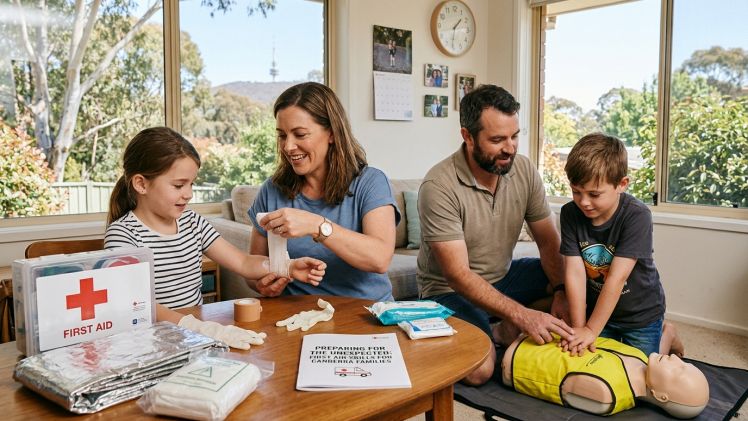
Keeping a properly stocked first aid kit at home makes it easier to respond promptly. Essential supplies may include sterile dressings, bandages, disposable gloves, and wound cleaning materials.
Recognising Choking and Breathing Emergencies
Young children often explore their surroundings by placing objects in their mouths, increasing the risk of choking. Small toys, certain foods, and household items can become dangerous when they obstruct the airway.
The distinction between moderate and severe choking should be understood by parents and other caregivers, who should also learn the proper reaction procedures for adults, children, and newborns.
First aid training also covers breathing difficulties associated with asthma and severe allergic reactions. Recognising symptoms early and knowing when to call Triple Zero (000) can help families respond appropriately.
Preparing for Outdoor Activities in Canberra
Canberra families frequently enjoy outdoor activities, including bushwalking, cycling, picnics, and exploring local parks. While these experiences encourage healthy lifestyles, they can also involve unexpected injuries.
Insect bites, dehydration, heat exhaustion, and falls are among the situations families should prepare for before heading outdoors.
Carrying a portable first aid kit, drinking sufficient water, checking weather conditions, and informing someone about travel plans are sensible precautions.
Understanding basic first aid also helps parents respond more effectively when professional assistance is not immediately available.
Building Confidence Through First Aid Certification
Although online resources provide useful information, structured training offers practical experience that reading alone cannot replace.
Parents interested in obtaining a first aid certificate Canberra can explore nationally recognised courses offered by training providers covering CPR, injury management, and emergency response procedures.
Practical assessments allow participants to demonstrate their understanding and receive feedback from qualified instructors. Successfully completing an accredited course can provide formal recognition of these skills.
Creating a Family Emergency Preparedness Plan
First aid knowledge becomes even more useful when combined with a household emergency plan. Families should discuss how to contact emergency services, where medical supplies are stored, and what to do when an adult is unavailable.
Older children can learn age-appropriate safety responsibilities, including recognising danger and contacting trusted adults.
Regularly reviewing emergency contacts, checking first aid supplies, and refreshing practical skills can help maintain household preparedness.
Conclusion
Preparing for emergencies is an important responsibility for every family. Whether managing a minor injury, responding to choking, or assisting someone experiencing a medical emergency, first aid knowledge provides practical support when it matters most.
For Canberra families, investing time in first aid education can build confidence, encourage safer habits, and strengthen emergency preparedness. Learning these essential skills today can help families protect one another when unexpected situations arise.